
Hotel Water Saving Strategies That Deliver Real ROI — and Help Protect NOI
Updated: Aug 22
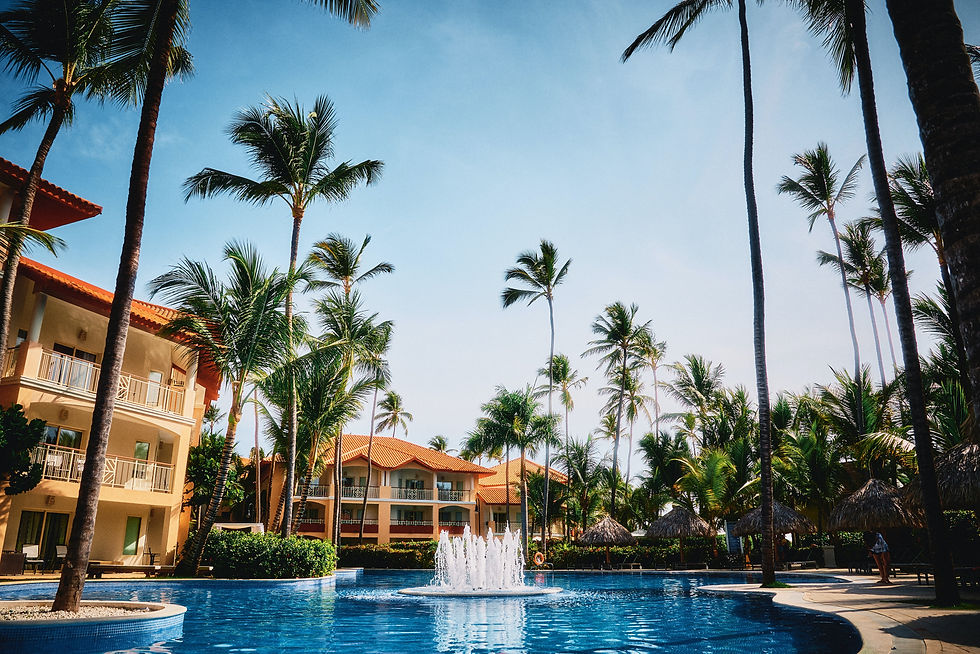
Hotels use a lot of water. It’s the nature of the business. Guest rooms. Laundry. Kitchens. Pools. Landscaping. Cooling systems. Housekeeping. Restaurants. Public restrooms. Water touches almost every part of hotel operations.
At FluidLytix, we think the more useful question isn’t simply: “How can a hotel use less water?”
It’s: “How can a hotel reduce water and related sewer costs without negatively affecting the guest experience—and how much of those savings can flow back into NOI?”
That distinction matters. For hotel owners, operators and asset managers, water efficiency isn’t just a sustainability initiative. Water and sewer are recurring operating expenses. When those expenses decrease and revenue remains stable, the savings can contribute directly to Net Operating Income, or NOI.
And unlike many property improvements, some water-efficiency measures can work quietly in the background without asking guests to change their behavior.
Why Hotel Water Costs Matter to NOI
NOI is one of the simplest ways to understand the operating performance of a commercial property:
Property Revenue − Operating Expenses = Net Operating Income
Water and sewer expenses sit on the operating-expense side of that equation.
That means every unnecessary dollar spent on water is a dollar that potentially reduces NOI.
Obviously, every hotel is different. Utility rates, occupancy, amenities, meter configurations and operating conditions all affect the numbers. But the principle is straightforward:
Reduce a recurring operating expense without reducing revenue, and you improve operating performance.
That’s why we believe hotel water efficiency deserves to be viewed through the same financial lens as energy efficiency, labor optimization and other expense-management strategies.
1. Start With the Water Bill
Before replacing equipment or launching a new conservation program, start with the information you already have.
Your water bills can reveal:
consumption trends
meter size
seasonal changes
unusual spikes
water and wastewater charges
the impact of increasing utility rates
We review commercial water bills every day, and they often tell a much bigger story than people expect. A sudden increase might point to a leak or operational issue.
Consistently high consumption might indicate a larger efficiency opportunity. And in utilities that use tiered rates, higher levels of consumption may be billed at increasingly expensive rates.
You don’t need to become a utility-rate expert. But you should know what the property is using and what that usage is costing you.
2. Find the Water You’re Paying for but Don’t Need
Leaks are still one of the most obvious places to start.
A leaking toilet, irrigation line, valve or fixture may seem minor in isolation, but hotels contain hundreds—or sometimes thousands—of potential water-use points. Preventive maintenance matters.
Engineering teams should have a process for identifying:
continuously running toilets
dripping faucets
irrigation leaks
malfunctioning valves
abnormal meter readings
unexplained overnight consumption
This isn’t glamorous work. It can, however, be financially meaningful. Water that leaks away still shows up on the meter—and potentially on the sewer side of the bill as well.
3. Use Efficient Fixtures Where They Make Sense
Low-flow toilets, showerheads, faucets and aerators have become standard components of hotel water-conservation programs. They can work very well. The key is balancing efficiency with guest experience.
Nobody wants to save water by creating a shower guests complain about. For that reason, fixture programs should be evaluated for both consumption and performance.
And once efficient fixtures are already installed, don’t assume the hotel has reached the end of its water-efficiency opportunity.
Fixture efficiency and system-level efficiency are not the same thing. That’s an important distinction.
4. Look Closely at Laundry Operations
For full-service hotels and resorts, laundry can represent a significant portion of total water use.
Efficiency opportunities may include:
high-efficiency commercial laundry equipment
appropriate load sizing
optimized wash cycles
linen and towel reuse programs
preventive equipment maintenance
water-reuse systems where practical
Again, the goal is not simply “use less.” The goal is to eliminate unnecessary consumption while maintaining cleanliness, service standards and guest expectations.
5. Don’t Forget Irrigation and Landscaping
In South Florida and other warm climates, irrigation can become a major component of property water use. Smart irrigation controls, soil-moisture monitoring, appropriate scheduling and landscape selection can all help.
One of the simplest principles is also one of the most useful: Water where and when it is actually needed.
Irrigation systems should also be inspected regularly. A broken sprinkler head can waste an astonishing amount of water while accomplishing very little for the landscaping.
6. Kitchens and Food Service Deserve Their Own Review
Hotels with restaurants, bars, banquet operations and commercial kitchens have another significant category of water use. Opportunities can include efficient pre-rinse spray valves, dishwashing equipment, operating procedures and equipment maintenance.
The best programs involve the people who actually work in those environments.
Engineering can identify equipment opportunities. Kitchen teams can often identify operational ones.
7. Measure What Happens After Improvements
This is where many conservation programs lose momentum. Someone installs new equipment. Everyone feels good about it. And then nobody goes back to determine what actually happened.
We believe water-efficiency improvements should be measured whenever possible.
Compare the property's historical baseline with post-improvement consumption and utility costs. Consider occupancy, operating changes and other relevant conditions.
The question shouldn't just be: “Did we install something?” It should be:
“Did it produce measurable results?” That is particularly important when the objective includes improving NOI.
8. Look Beyond Individual Fixtures to the Water System Itself
This is where FluidLytix enters the conversation. The patented WAVE Valve™ works at the building's main water line rather than replacing individual fixtures throughout the property. That means it can complement measures a hotel may already have in place–such as low-flow fixtures, conservation programs and efficient equipment.
The Wave Valve is not a traditional pressure-reducing valve. It is designed to optimize system conditions while maintaining consistent, usable pressure at fixtures. For a hotel, that matters because water efficiency cannot come at the expense of the guest experience. Nobody checking into a hotel cares that the property has an impressive conservation program if the shower performs poorly. The objective is efficiency without making the guest feel the conservation measure.
A Real Example: The Gates Hotel Miami Beach
We prefer talking about actual property performance rather than theoretical percentages.
At The Gates Hotel Miami Beach, FluidLytix documented an average:
20.7% reduction in total water utility costs.
That result is especially meaningful because this wasn’t a laboratory environment.
It was an operating hotel with real guests, real occupancy patterns and real utility bills.
And from an ownership perspective, reducing a recurring utility expense has another implication: Those savings can contribute to NOI.
What Could Water Savings Mean for Hotel Value?
Here is why owners and asset managers pay attention to NOI. Consider a purely hypothetical example. Suppose a hotel reduces recurring water and related sewer expenses by: $30,000 per year
If revenue and other operating expenses remain unchanged, that $30,000 can potentially increase annual NOI by approximately the same amount.
For income-producing real estate, increases in sustainable NOI can also influence property valuation.
For example, using a hypothetical 7% capitalization rate:
$30,000 ÷ 0.07 = approximately $428,600
That does not mean a $30,000 water reduction automatically adds exactly $428,600 to every hotel's value. Cap rates, underwriting, sustainability of savings, market conditions and many other factors matter. But it illustrates why sophisticated property owners care about recurring operating expenses. A utility-saving project isn't only about this month's bill. It can be about the economics of the asset.
The Best Hotel Water Strategy Is Usually a Combination
There probably isn’t one magic answer to hotel water efficiency.
The strongest programs combine:
leak detection and maintenance
efficient fixtures
laundry optimization
smart irrigation
kitchen efficiency
staff awareness
monitoring and verification
system-level water efficiency
The important thing is that these strategies do not have to compete with each other.
They can work together. That’s why we describe the WAVE Valve as complementary to existing conservation measures rather than a replacement for them.
Our Advice: Look at Water as an Operating Expense, Not Just a Utility Bill
If you operate a hotel, your water bill deserves the same kind of scrutiny you give other significant controllable expenses. Not because guests should use uncomfortable showers. Not because housekeeping should compromise standards.
And not because sustainability should come at the expense of hospitality. The goal is much simpler:
Use the water the property actually needs. Pay for less water that it doesn’t.
When that lowers a recurring operating expense, the benefit doesn't stop at the utility bill. It can flow directly to NOI.
Want to Know What the Opportunity Looks Like at Your Hotel?
Start with one recent water bill. FluidLytix can review your property's consumption and utility costs and help determine whether there appears to be a meaningful savings opportunity.
And to see documented results from hotels and other commercial properties:

Comments